
Key Takeaways
Bangkok’s Chinatown, known as Yaowarat, offers an unparalleled street food experience easily accessible via the MRT Blue Line to Wat Mangkon station, making it a must-visit for culinary explorers. Plan your visit for the evening when the area truly comes alive with countless food stalls and vibrant energy.
- Yaowarat is best experienced in the evening for its bustling street food scene.
- The MRT Blue Line directly serves Chinatown at Wat Mangkon station.
- Consider combining your food adventure with a visit to the Grand Palace via river boat.
- Stay hydrated and wear comfortable shoes for walking through the lively streets.
- Explore a variety of Chinese and Thai dishes, from noodles to seafood and desserts.
Getting to the Heart of Yaowarat
Bangkok’s Chinatown, or Yaowarat, is a vibrant district renowned for its incredible street food and cultural richness. For travelers staying along the BTS Sukhumvit line, reaching Yaowarat is straightforward. From StayAt Bedever near BTS Phra Khanong (E8), you can take the BTS Sukhumvit line towards Siam (CEN). At Siam, which is the interchange between the Sukhumvit and Silom lines, transfer to the Silom line. Continue to Sala Daeng station, where you can connect to the MRT Blue Line at Silom station. The MRT Blue Line conveniently serves Chinatown at Wat Mangkon station, placing you directly in the heart of the culinary action. This integrated public transport approach helps navigate Bangkok’s traffic efficiently, ensuring more time for tasting.
A Culinary Journey Through Chinatown
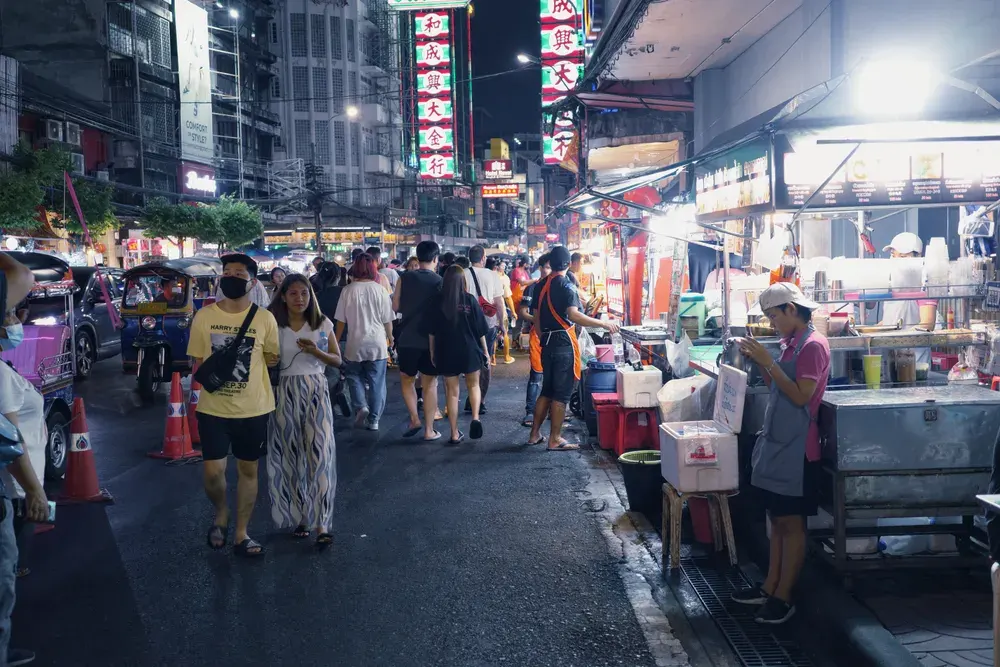
Once you arrive at Wat Mangkon MRT station, the sights, sounds, and aromas of Yaowarat immediately envelop you. The main street, Yaowarat Road, transforms into a sprawling open-air restaurant as evening falls. Here, you’ll find an endless array of food stalls and shophouse eateries, each offering unique flavors. From savory stir-fried noodles like Pad See Ew and Pad Kee Mao to succulent seafood dishes, the choices are abundant. Don’t miss the chance to try local specialties such as oyster omelets, roasted chestnuts, and various dim sum options. For those with a sweet tooth, mango sticky rice and traditional Chinese desserts are readily available.
| From | To | Line/Mode | Purpose |
|---|---|---|---|
| StayAt Bedever | Siam | BTS Sukhumvit | Interchange |
| Siam | Sala Daeng | BTS Silom | Connect to MRT |
| Silom Station | Wat Mangkon | MRT Blue Line | Chinatown access |
| Saphan Taksin | Grand Palace | Chao Phraya Boat | Old Town access |
Beyond the Bites: Exploring Yaowarat’s Charm
While food is undoubtedly the main draw, Yaowarat offers more than just culinary delights. The area is rich in history and culture, with ornate temples and traditional Chinese architecture. Take some time to wander through the smaller alleys and side streets, where you might discover hidden gems, traditional tea houses, or local markets. The atmosphere is always lively, especially during festivals like Chinese New Year, which is celebrated with great enthusiasm. Remember to keep an eye on your belongings in crowded areas and embrace the energetic chaos that defines this unique part of Bangkok. For a different perspective, consider a visit to the Grand Palace in the Rattanakosin old town, accessible by taking the BTS Silom line to Saphan Taksin and then a Chao Phraya river boat.
Plan your stay
StayAt Bedever is a boutique hotel about 15 steps from BTS Phra Khanong, run by a Singaporean hospitality team. It is built for exactly the trip this guide describes: a clean, comfortable, well connected base with our own Born to Bean cafe downstairs and a proper 5-Star Sleep setup upstairs.
Book direct and you deal with the people who actually run the hotel, not a booking platform, and our direct guests get a little extra every stay.
Book StayAt Bedever direct, or just chat with us on WhatsApp or LINE.
Key Questions Answered
What is the best way to get to Bangkok’s Chinatown from the Sukhumvit area? The most efficient way is to take the BTS Sukhumvit line to Siam, transfer to the BTS Silom line, then alight at Sala Daeng to connect to the MRT Blue Line at Silom station, and ride to Wat Mangkon station, which is directly in Chinatown.
When is the best time to visit Yaowarat for street food? Yaowarat truly comes alive in the evening, typically from late afternoon onwards, when numerous street food stalls set up and the area becomes a bustling hub of culinary activity.
What kind of food can I expect to find in Chinatown? You can expect a wide variety of Chinese and Thai street food, including stir-fried noodles, fresh seafood, dim sum, oyster omelets, roasted chestnuts, and traditional desserts like mango sticky rice.
Are there any cultural attractions in Yaowarat besides food? Yes, beyond the food, Yaowarat is home to several beautiful temples and showcases traditional Chinese architecture, offering a rich cultural experience as you explore its main streets and smaller alleys.
What should I keep in mind when planning a food walk in Chinatown? Wear comfortable shoes, stay hydrated, and be mindful of your belongings in crowded areas. It’s also a good idea to have some small Thai baht notes for easy transactions at street stalls.
Sources
Structure and Stations : Routes - BTS Skytrain Area Map - BTS Skytrain City Bus from Don Mueang Airport Guide - THAILAND.GO.TH