
Key Takeaways
The BTS Skytrain is the single easiest way to move around central Bangkok. It runs elevated above the traffic, it is air-conditioned, and the signs are bilingual, so a first-timer can figure it out within one ride. There are two lines, the Sukhumvit line and the Silom line, and they cross at Siam station.
- The BTS is elevated and traffic-proof, which makes it faster and more predictable than a car or taxi for most trips across the city.
- Two lines cover most of what visitors need: the Sukhumvit line and the Silom line, interchanging at Siam.
- You can buy single-journey tickets from the machines, or get a rechargeable Rabbit card if you are staying longer.
- Rough rush hours are 7 to 9am and 5 to 8pm, so travel outside those windows when you can.
- Basing yourself near a station changes the whole trip, because everything else becomes a short, calm ride away.
What the BTS actually is
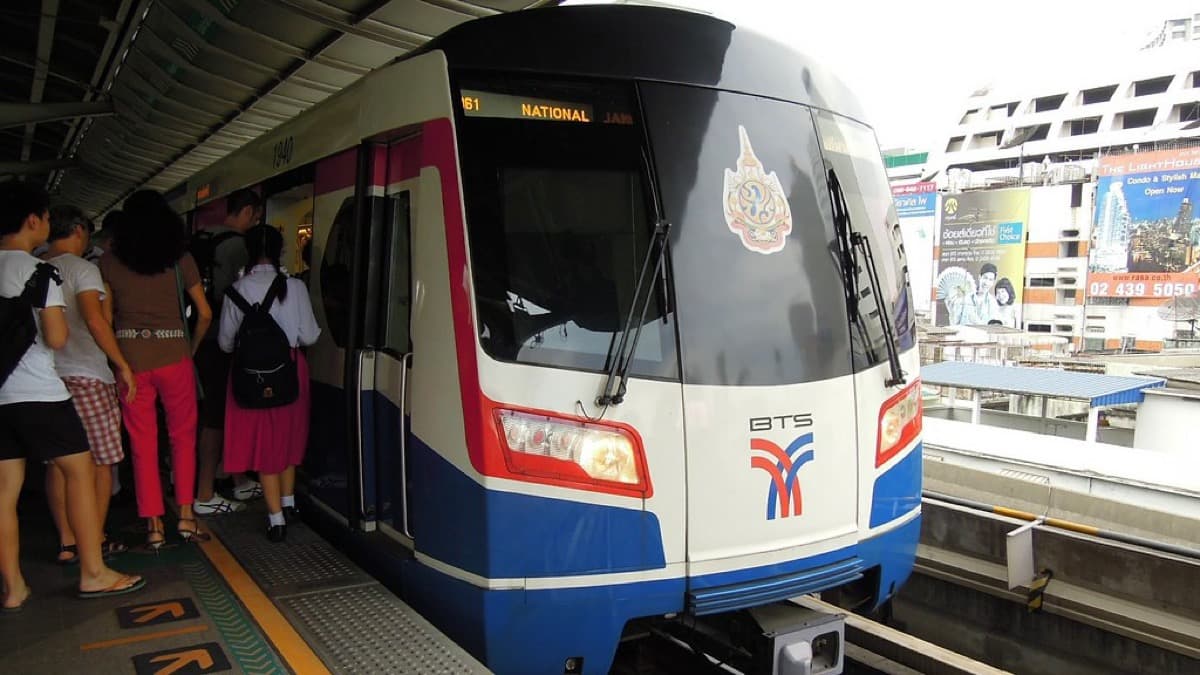
The BTS Skytrain is Bangkok’s elevated rail system, and it is the backbone of getting around the city without touching the road. Because it runs above street level on its own track, it is not affected by the traffic that can turn a short taxi ride into a long, frustrating one. Every carriage is air-conditioned, which matters in Bangkok’s heat, and the whole system is clean, well signed, and simple to use once you have done it once.
For a first-time visitor, this is the detail that matters most: you do not need to understand Bangkok’s road layout at all. You only need to understand the rail map, and the rail map is small and logical.
The two lines, and where they meet
The BTS has two lines that cover almost everywhere a visitor needs to go.
The Sukhumvit line runs from the northern suburbs down through the centre and out along Sukhumvit Road to the east, past stations like Asok, Phrom Phong, Thong Lo, Ekkamai, and Phra Khanong. The Silom line runs from the National Stadium area down through Silom and across the river to Thonburi.
The two lines cross at Siam station, which works as the system’s main interchange. If your trip needs both lines, Siam is where you change trains. Once you have that one fact, the rest of the system is easy to picture: Sukhumvit line east and northeast, Silom line south and across the river, Siam in the middle joining them.
How to buy a ride
You have two easy options.
- Single-journey tickets. Head to the ticket machines near the entry gates. Most machines have an English option, and they show a small system map so you can tap your destination station and pay for exactly that trip. A staffed ticket booth is usually nearby if you need change or help.
- The Rabbit card. If you are staying more than a couple of days, it is worth getting a rechargeable Rabbit card from a staff counter. You tap it at the gates instead of buying a ticket every time, which saves you queuing at the machines on every trip. Fares vary by distance travelled, so check current prices at the station or on the BTS website before you plan your budget.
Either way, keep your ticket or card until you exit. The gates check it again on the way out.
Reading the map and the platform signs
The system map, the platform signs, and the train announcements are all bilingual, in Thai and English. Every station has a code, a letter and a number, so Siam is simply an interchange point and stations on each line count outward from there. On the Sukhumvit line, for example, the sequence runs from Nana (E3) out past Phra Khanong (E8) to On Nut (E9) and beyond.
On the platform, look for the overhead signs showing the line colour, the direction of travel, and the next few stations. Digital displays inside the train repeat the same information, so you can always confirm you are heading the right way before the doors close.
Riding etiquette
A few habits make the ride smoother for you and everyone around you.
- Queue at the marked spots on the platform rather than crowding the doors.
- Let passengers off the train before you step on.
- Priority seats near the ends of each carriage are reserved for monks, the elderly, pregnant passengers, and people with disabilities. Give them up if someone needs one.
- Eating and drinking are not allowed on board or on the platforms.
- Keep bags close to you, especially during busier periods, so the doors and aisles stay clear.
Rush hour, and when to travel instead
Like any major city, Bangkok has a rush hour, roughly 7 to 9am and 5 to 8pm on weekdays. Trains during these windows can be genuinely packed, standing room only, with a wait for a car you can actually fit into. If your schedule is flexible, travelling just outside these hours makes a real difference to comfort, especially with luggage.
Outside rush hour, the BTS is easy, quick, and rarely crowded enough to be a problem.
A first ride, step by step
- Find the station entrance. Look for the elevated structure and the BTS sign, then head up the stairs or escalator to the ticket hall.
- Check the map for your destination station and its line.
- Buy a single-journey ticket at the machine, or tap your Rabbit card if you have one.
- Go through the gate, keeping your ticket or tapping your card.
- Head to the correct platform for your direction of travel, checking the overhead signs.
- Queue at the marked doors and let passengers off before boarding.
- Watch the digital display inside the train to track your stop.
- Exit and tap your card or feed your ticket into the gate to leave the paid area.
| Situation | Do this |
|---|---|
| First trip of the day, no card yet | Buy a single-journey ticket at the machine, English option available |
| Staying more than a couple of days | Get a Rabbit card at a staff counter to skip the machine each time |
| Travelling between the two lines | Change at Siam, where the Sukhumvit and Silom lines cross |
| Rush hour (roughly 7 to 9am, 5 to 8pm) | Travel outside these windows if your schedule allows |
| Carrying luggage | Avoid rush hour and stand clear of the doors on busy trains |
| Not sure of the fare | Check current prices at the machine or on the BTS website, fares vary by distance |
Why basing yourself near a station matters
Everything above is easier to picture once you realise what it means to actually live near a BTS station for a few days. Once your accommodation is a short walk from a platform, the whole city opens up without needing a car, a taxi, or a fixed schedule around traffic. You step downstairs, tap in, and you are moving, whether that is to a meeting, a market, or dinner across town.
This is also why we always point guests toward our guide to staying near BTS Phra Khanong. Being close enough to a station that it barely registers as a decision changes how relaxed the whole trip feels, and it is the biggest single factor in how easy Bangkok is to enjoy.
If you are arriving from the airport, our guide to getting from Suvarnabhumi to Sukhumvit by BTS or taxi walks through the fastest way to connect onto this same network the moment you land.
Plan your stay
Our front door is about 15 steps from BTS Phra Khanong on the Sukhumvit line, so this whole guide is basically our daily life. StayAt Bedever is a boutique hotel run by a Singaporean hospitality team, with our own Born to Bean cafe downstairs and a proper 5-Star Sleep setup upstairs.
Book direct and you deal with the people who actually run the hotel, not a booking platform, and our direct guests get a little extra every stay.
Book StayAt Bedever direct, or just chat with us on WhatsApp or LINE.
Key Questions Answered
How do I pay for the BTS? Buy a single-journey ticket from the machines at any station, most have an English option, or use a rechargeable Rabbit card if you are staying longer. Fares vary by distance, so check current prices before you travel.
What is a Rabbit card? It is a rechargeable stored-value card you tap at the gates instead of buying a ticket for every trip. It is worth getting from a staff counter if you plan to ride the BTS more than a couple of times.
What hours does the BTS run? The first trains start early in the morning and the last run around midnight, but exact timetables change, so check current schedules on the BTS website before planning a very early or very late trip.
Is the BTS easy to use without speaking Thai? Yes. Signs, ticket machines, and platform announcements are all bilingual in Thai and English, and station codes make the map easy to follow even on your first ride.
Should I take the BTS or a taxi? For most trips across central Bangkok, the BTS wins on time and predictability, since it is not affected by road traffic. A taxi or Grab still makes sense for places the BTS does not reach, or for late-night trips when trains are not running.
Sources
Hero photo: David McKelvey, CC BY 2.0.